
ML/ALGORITHMIC TOOLS FOR TACTICAL SPACE DOMAIN AWARENESS

So what? For readers who may not work in the Space Domain Awareness (SDA) community, the idea behind this article in its extrapolated form is the deployment of Machine Learning and algorithmic analysis as close to the tactical edge as possible. As the United States military continues to employ layered and integrated sensing networks, the temptation is to locate analysis at higher level echelons, far-removed from the data collection points. While this approach may appear attractive due to its potential for cost savings and increased data input, it simultaneously introduces a critical vulnerability by creating a single point of failure that adversaries could exploit. In this writing I propose an incremental and redundant addition to tactical assets to ensure capability preservation in a contested or degraded environment.
The intent behind this article is to propose a pilot program that increases tactical-level decision support capability; that reduces SDA decision-making latency by enabling initial data interpretation at radar weapon systems. Specifically, this article advocates for the employment of an edge-compute construct that leverages machine learning–based maneuver detection and radar cross section (RCS) pattern-of-life analysis to identify anomalous on-orbit behavior at the point of data collection. By shifting initial anomaly detection to the tactical edge while preserving centralized authority for adjudication and catalog updates, this article argues that the military space enterprise can achieve faster detection, improved responsiveness, and better alignment with mission command principles in an increasingly congested and contested space domain. Mission command has been highlighted as the central point in recent Task Force - Futures, Chief of Space Operations directed, concepts for what Space Battle Management will look like in a future conflict.[1] The deployment of these tools looks to enable future iterations of a mission command-centric model.
As the population of objects within the space domain continues to expand at an unprecedented rate, one of the most pressing challenges facing the military space enterprise is sustaining operationally relevant decision timelines.
In response, SDA has emerged as a foundational enabler for all other space, and increasingly terrestrial, warfighting disciplines.[2] Without a clear and timely understanding of how the space environment is configured, the effective employment of military capabilities becomes untenable. Within today’s increasingly congested and contested orbital environment, the persistent custody and characterization of resident space objects must be conducted continuously and with minimal latency. Space operations professionals must be capable of detecting and discerning maneuvers, behavioral deviations, and anomalous activity as close to the tactical level as possible. This level of discernment is essential to reducing decision latency and enabling the effective exercise of mission command.
Current SDA operational frameworks rely heavily on centralized decision-making constructs and a non-degraded operating environment. Tasking to the Space Surveillance Network (SSN), from which most authoritative operational tracking data is derived, is typically issued through command-and-control organizations. Operational units such as the National Space Defense Center Detachment 1 and the 18th Space Defense Squadron aggregate global sensor observations through weapon systems such as the Advanced Tracking and Launch Analysis System (ATLAS). ATLAS fuses these observations to produce an integrated space picture and identify priority concerns, including conjunction risks, new launches, suspected maneuvers, and anomalous behavior.[3] When noteworthy or anomalous satellite activity is identified at this centralized SDA node, a Mission Type Order is generated and disseminated to operational units possessing sensors that are optimally positioned to observe the event. Under this construct, the strategic echelon interprets artifacts of orbital state change and cues the tactical level to conduct focused sensing to validate, characterize, and refine understanding of on-orbit behavior.
While effective for steady-state awareness, the current centralized SDA construct introduces substantial latency into time-sensitive detection and characterization processes; particularly during rapidly unfolding events such as satellite maneuvers or anomalous behavior. Tactical units are primarily employed as sensing nodes rather than as initial interpreters of collected data, resulting in delayed recognition of behavior changes and severe reliance on strategic-level tipping and cueing. This reliance on centralized interpretation limits the ability of tactically employed sensors to exploit the full value of locally available data at the time of collection. The absence of internal processing and anomaly detection at the tactical level represents a growing operational gap that directly impacts decision speed and responsiveness.
To reduce decision latency and enhance the responsiveness of SDA operations, this proposal recommends fielding an edge-compute decision support capability co-located with radars, for this use case the ST-85 Eglin radar. This capability would ingest locally stored radar measurement data and derive tracking products and apply machine learning techniques to autonomously detect indicators of on-orbit maneuver as an object is passing or immediately after observations are generated.[4] Rather than relying solely on centralized tipping and cueing, this approach enables initial anomaly detection at the point of data collection while preserving centralized authority for catalog updates and operational decisions.
This dedicated compute node installed at the weapon system would process native radar observations through an orbital state generator. Simultaneously, RCS measurements are also fed into this compute node.
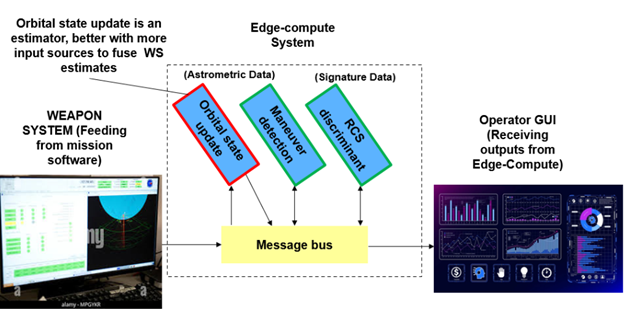
Figure 1. Edge-Compute Architecture for Tactical SDA Operations.[5]
The first analytic function applies a machine learning–based maneuver detection algorithm that evaluates deviations between predicted and observed object behavior over time. By analyzing residual growth, covariance changes, and orbit solution inconsistencies, the algorithm generates a confidence-scored assessment of whether an object has likely executed an unconfirmed maneuver.[6] This assessment is presented to operators as a decision aid, highlighting the likelihood of maneuvering and the confidence score in that assessment. In parallel, a second analytic function evaluates long-term RCS pattern-of-life data for each tracked object. By establishing a historical baseline of expected RCS behavior across varying observation geometries, the system identifies statistically significant deviations that may indicate attitude instability or tumbling. When new RCS values are generated through observations the algorithm compares the new RCS scintillation point against the histogram to identify if that value is anomalous in nature.[7]
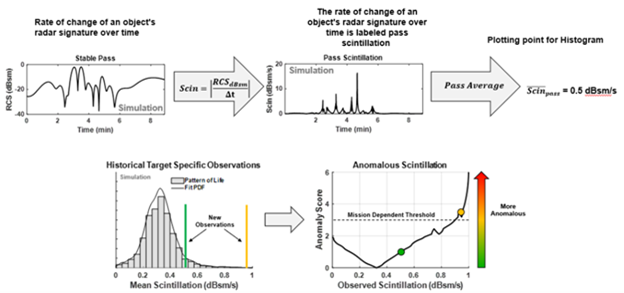
Figure 2. Radar Cross Section (RCS) Discriminant Algorithm Architecture.[8]
Outputs from both analytic functions are fused into a lightweight anomaly report on a Graphical User Interface containing object identification, time of observation, and confidence scores. These reports, if anomalous or indicating maneuver, would be reported to centralized SDA nodes to inform further analysis, allow for follow-on sensor tasking, or catalog refinement. By pushing initial interpretation to the tactical edge, this solution inverts the traditional tipping-and-cueing construct while maintaining centralized control of authoritative decisions.
Implementing tactical-level anomaly detection through an edge-compute construct offers several advantages. First, it significantly reduces decision latency by enabling rapid identification of anomalous behavior immediately following data collection, rather than waiting for centralized processing and downstream cueing. This improved timeliness enhances the ability of operators and analysts to detect and respond to time-sensitive events such as satellite maneuvers or unexpected attitude changes. Second, the proposed approach improves resilience and efficiency by reducing dependence on continuous data transmission to centralized nodes that must then solve for anomalous behavior. By transmitting only confidence-scored anomaly reports, the tactical unit can tip command and control units for further analysis. This continued anomaly detection can occur even in degraded or contested communications environments. Finally, this construct aligns with mission command principles by decentralizing data interpretation while retaining centralized decision authority. Tactical crews are empowered with actionable decision aids without assuming responsibility for catalog adjudication or operational tasking, enabling faster sensing-to-decision timelines while preserving unity of command.
While the proposed capability offers significant benefits, several limitations and risks must be acknowledged. Machine learning–based anomaly detection provides probabilistic assessments rather than definitive determinations, and confidence scores may be influenced by data quality, observation geometry, and modeling assumptions.[9] False positives or ambiguous detections may occur, particularly for objects with limited historical data for maneuver detection or highly variable RCS signatures.[10] As a result, the proposed system should be employed strictly as a decision support tool rather than an authoritative source for maneuver confirmation, catalog updates, or battle damage assessment. Finally, the effectiveness of the edge-compute construct depends on integration with existing SDA architectures and the availability of sufficient computational resources at the weapon system. These factors should be addressed through phased experimentation and prototyping prior to operational fielding.
With this proposal there are two viable courses of action that the SDA enterprise could undertake. Either a path of least resistance with status quo operations or an incremental step towards algorithmic weaponeering of phased array radar data in this case for the ST-85.
The first is maintaining the current course, an option that would ensure SDA operations continue to rely on centralized detection, interpretation, and cueing processes without modification. Tactical units would remain primarily employed as sensing nodes, executing tasking generated by centralized SDA organizations. This approach carries minimal near-term risk and requires no additional resourcing or changes to existing operational frameworks.
The second would include implementing an edge-compute decision support capability at radar weapon systems to enable local anomaly detection using machine learning–based maneuver assessment and RCS pattern-of-life analysis. Tactical crews would receive confidence-scored indications of anomalous behavior in near-real time, while centralized SDA organizations retain authority for adjudication, catalog updates, and follow-on taskings of other sensors.
This pilot should focus on assessing the effectiveness of machine learning–based maneuver detection and RCS pattern-of-life analysis at the tactical sensor for reducing detection latency and improving anomaly characterization. Results from the pilot should inform future decisions regarding broader fielding, integration with existing SDA architectures, and potential doctrine, training, and procedural updates to emphasize tactical awareness.
Implementing a tactical edge-compute anomaly detection capability provides a practical and resilient means of reducing this latency by enabling initial data interpretation at the point of collection. By leveraging machine learning–based maneuver detection and cross section RCS pattern-of-life analysis as decision support tools, this approach enhances tactical awareness while preserving centralized authority for adjudication and catalog management. Endorsing a phased pilot of this capability positions the military space enterprise to adapt its SDA operations to the realities of a dynamic orbital environment, improve sensing-to-decision timelines, capitalize on data exploitation, and better align operational execution with mission command principles.
REFERENCES
[1] Maj Clare O’Reilly, “Mission Command at Tac Echelon” (concept paper, Task Force – Futures, United States Space Force, February 5, 2026).
[2] Unshin Lee Harpley, “Saltzman Pushes Need for ‘Actionable’ Space Domain Awareness,” Air & Space Forces Magazine, March 27, 2024, https://www.airandspaceforces.com/space-force-space-domain-awareness-saltzman/.
[3] Space Operations Command Public Affairs, “U.S. Space Force’s ATLAS System Achieves Operational Acceptance, Revolutionizing Space Domain Awareness and DoW Software Acquisition,” Space Systems Command, September 30, 2025, https://www.ssc.spaceforce.mil/Newsroom/Article-Display/Article/4319013/us-space-forces-atlas-system-achieves-operational-acceptance-revolutionizing-sp.
[4] Zach Folcik (Technical Staff, MIT Lincoln Laboratory), interview by author, January 29, 2026.
[5] Graphic designed from interviews with Vicki Dydek, John-Scott Smokelin, Josie Johnson, and Kallee Gallant (MIT Lincoln Laboratory), interviews by author, January 29‒February 5, 2026.
[6] Folcik, interview.
[7] Dydek et al., interviews.
[8] Diagram provided by Dydek et al. (MIT Lincoln Laboratory), January‒February 2026.
[9] Folcik, interview.
[10] Dydek et al., interviews.
Disclaimer:
The views and opinions expressed in this paper are solely those of the author and do not reflect the official policy, position, or endorsement of the Department of War, the United States Space Force, or any other agency of the U.S. Government.